Coronary Arteries Anatomy at a Glance: A Guide to RCA, LCA, and Angiographic Views
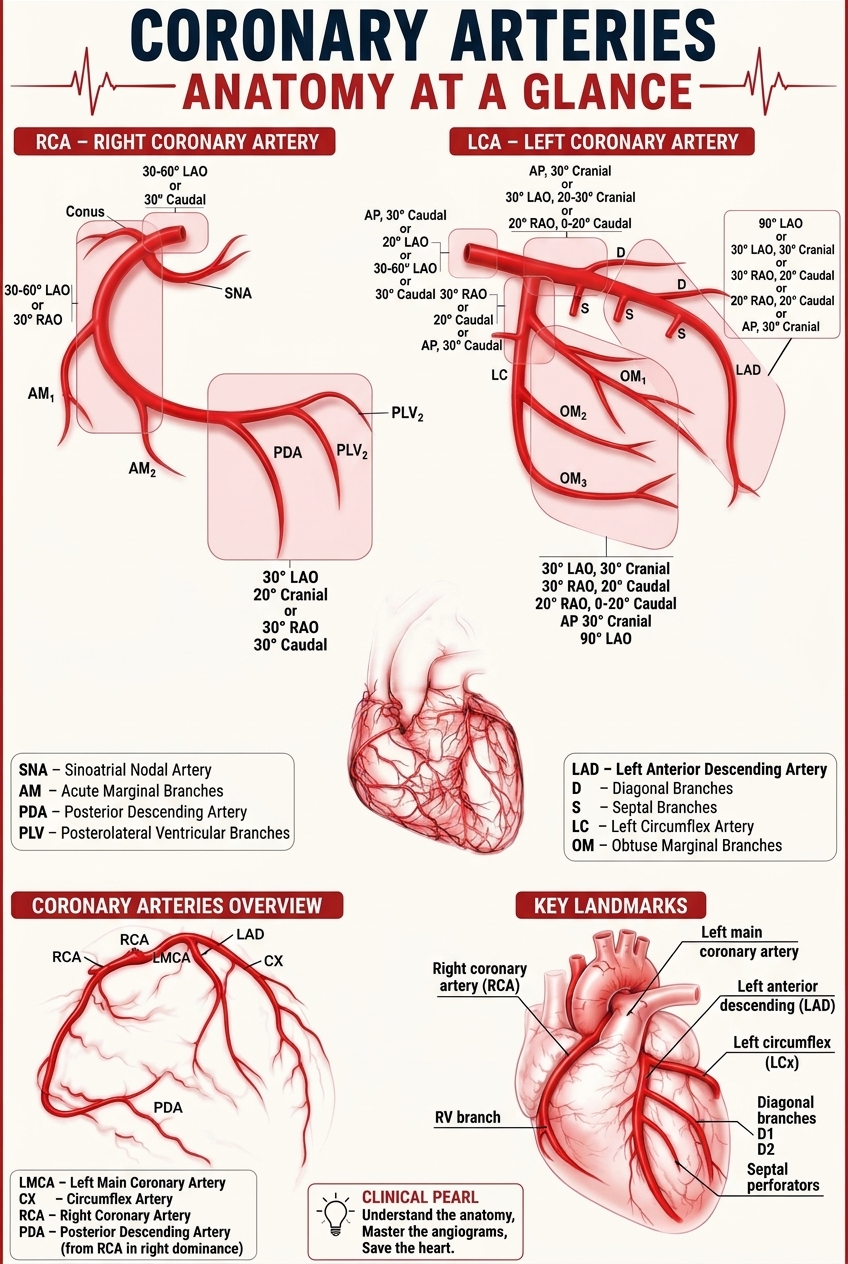
Understanding coronary artery anatomy is fundamental for interpreting angiograms and diagnosing cardiovascular disease. This comprehensive visual guide breaks down the coronary circulation into its two primary systems: the Right Coronary Artery (RCA) and the Left Coronary Artery (LCA). The RCA supplies the right side of the heart and branches into key vessels such as the Acute Marginal (AM), Posterior Descending Artery (PDA), and Posterolateral Ventricular (PLV) branches. Conversely, the LCA is a more complex network that quickly bifurcates into the Left Anterior Descending (LAD)—which supplies the front of the heart and the septum via septal perforators—and the Left Circumflex (LCx) artery, which wraps around the left side of the heart, giving off Obtuse Marginal (OM) branches.
Beyond just memorizing the branches, mastering the specific angiographic angles—such as LAO (Left Anterior Oblique), RAO (Right Anterior Oblique), Cranial, and Caudal—is essential for visualizing these vessels clearly in the cath lab. This cheat sheet provides the optimal viewing angles for every major coronary segment, from the ostium of the left main to the distal PDA. As the clinical pearl emphasizes: Understand the anatomy, master the angiograms, save the heart. Keep this reference handy to quickly identify key landmarks like the diagonal branches of the LAD and the RV branch of the RCA during your clinical practice or cardiology exams.
Leave a Reply