10 Breathing Patterns You Must Know for the NCLEX: Rate, Rhythm, and Depth
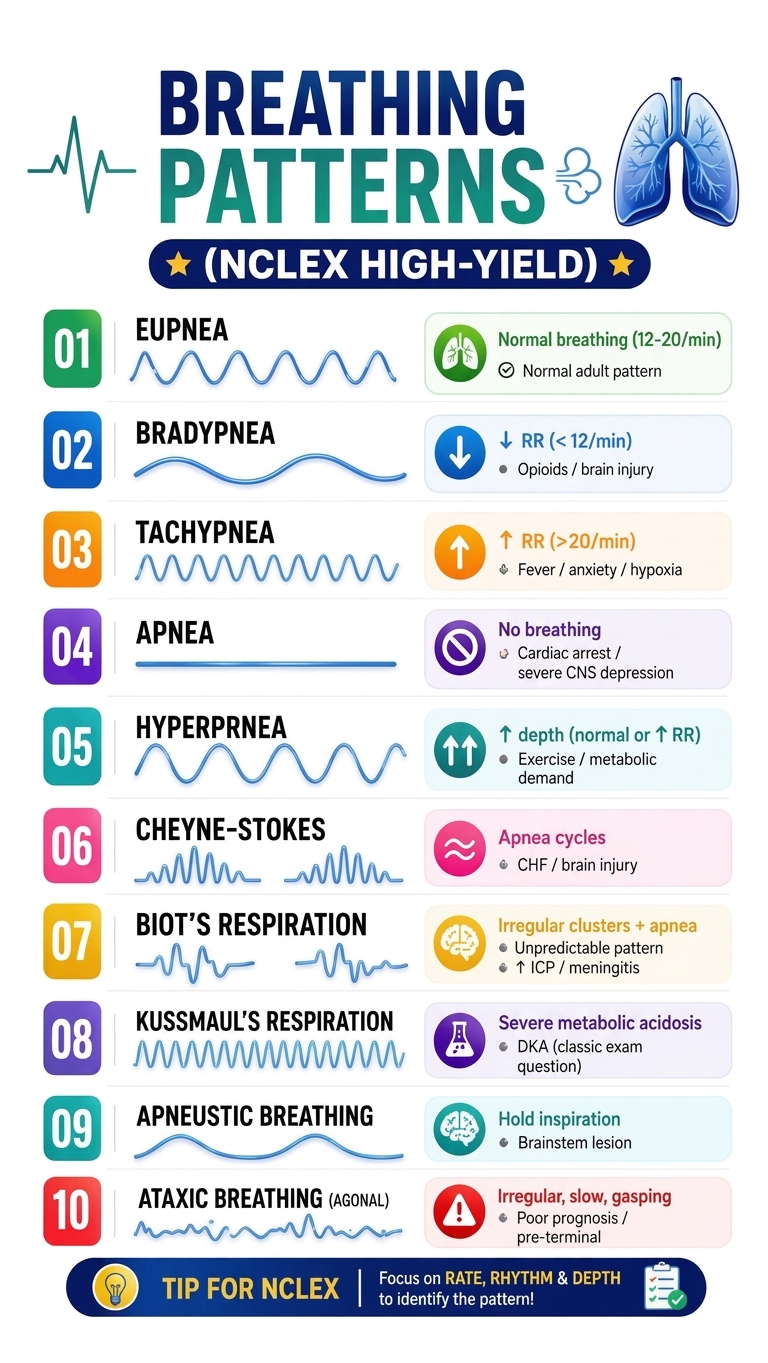
Respiratory assessment is a critical skill in nursing and clinical practice, and recognizing abnormal breathing patterns can provide immediate clues about a patient’s underlying condition. This high-yield NCLEX guide breaks down the ten most common breathing patterns by focusing on three key variables: rate, rhythm, and depth. While Eupnea represents normal, relaxed breathing (12-20 breaths per minute), deviations like Bradypnea (slow rate, often linked to opioids or brain injury) and Tachypnea (fast rate, typically caused by fever, anxiety, or hypoxia) require prompt evaluation. Understanding these basic rate changes is the foundation of any respiratory assessment.
For advanced practice and exam success, distinguishing between complex rhythmic and depth abnormalities is essential. For example, Cheyne-Stokes respiration—characterized by cyclical periods of apnea—is a classic sign of heart failure or brain injury, whereas Kussmaul’s respiration (deep, rapid breathing) is the hallmark of severe metabolic acidosis, commonly seen in Diabetic Ketoacidosis (DKA). Recognizing life-threatening patterns like Apneustic breathing (a prolonged inspiratory pause indicating a brainstem lesion) or Ataxic breathing (irregular, agonal gasping signaling a poor prognosis) allows healthcare providers to intervene rapidly. Mastering these visual waveforms is a surefire way to tackle respiratory exam questions with confidence.
Leave a Reply