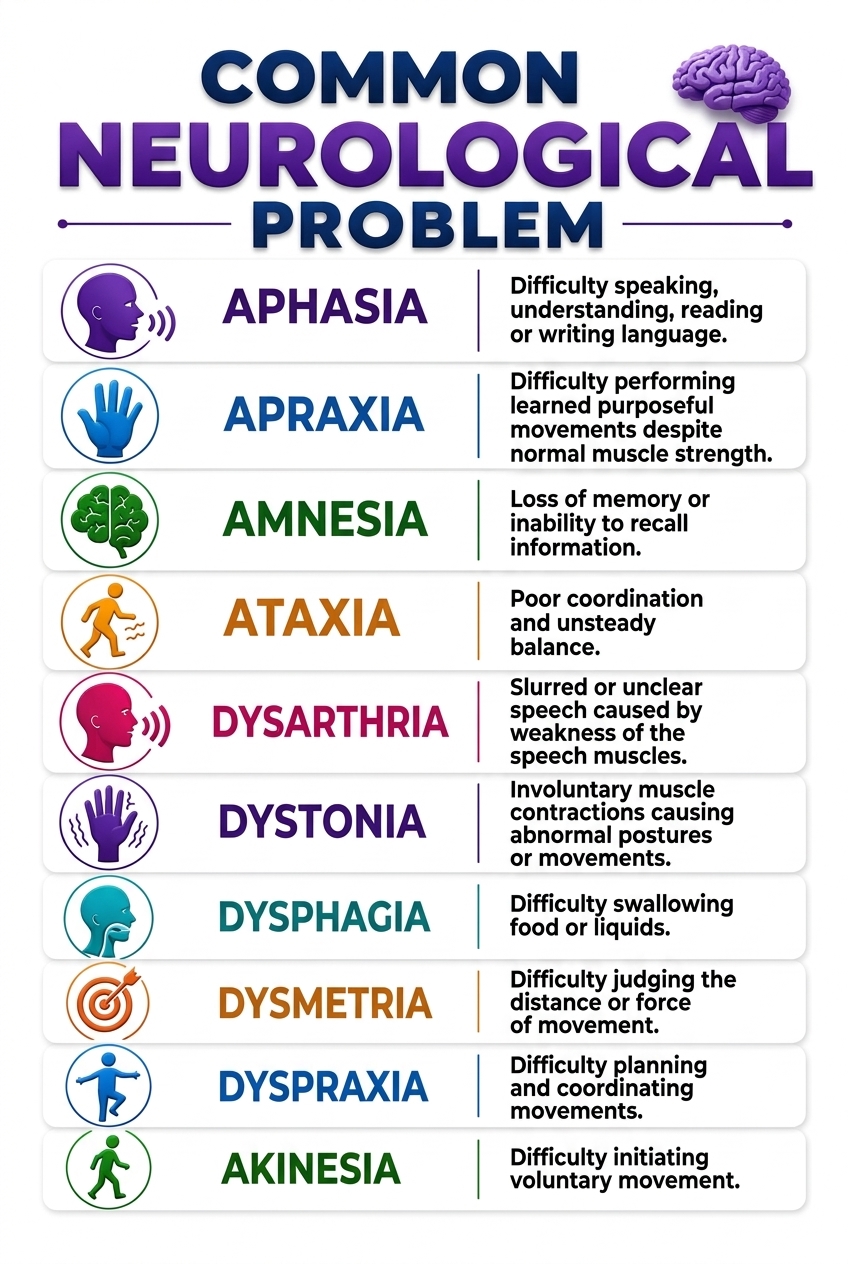
Neurological assessments can often reveal specific brain dysfunctions through distinct clinical signs, making it crucial for healthcare professionals to accurately distinguish between them. This visual guide breaks down 10 common neurological problems that frequently appear in clinical practice and exams. For instance, it is vital to differentiate between Aphasia (a language disorder affecting speaking, understanding, reading, or writing) and Dysarthria (slurred or unclear speech caused by muscle weakness). Similarly, understanding the difference between Apraxia (difficulty performing learned movements despite normal strength) and Dyspraxia (difficulty planning and coordinating movements) is essential for localizing the lesion and planning appropriate rehabilitation.
Beyond speech and movement planning, this chart highlights other critical deficits that impact daily living. Recognizing Amnesia (memory loss) or Ataxia (poor coordination and balance) helps identify specific neurological pathways involved. Furthermore, conditions like Dysphagia (difficulty swallowing) require immediate nursing intervention to prevent aspiration, while movement disorders such as Dystonia (involuntary muscle contractions) and Akinesia (difficulty initiating voluntary movement) provide clues to basal ganglia dysfunction. Mastering these terms and their definitions is the first step toward accurate diagnosis and effective patient care.
Leave a Reply