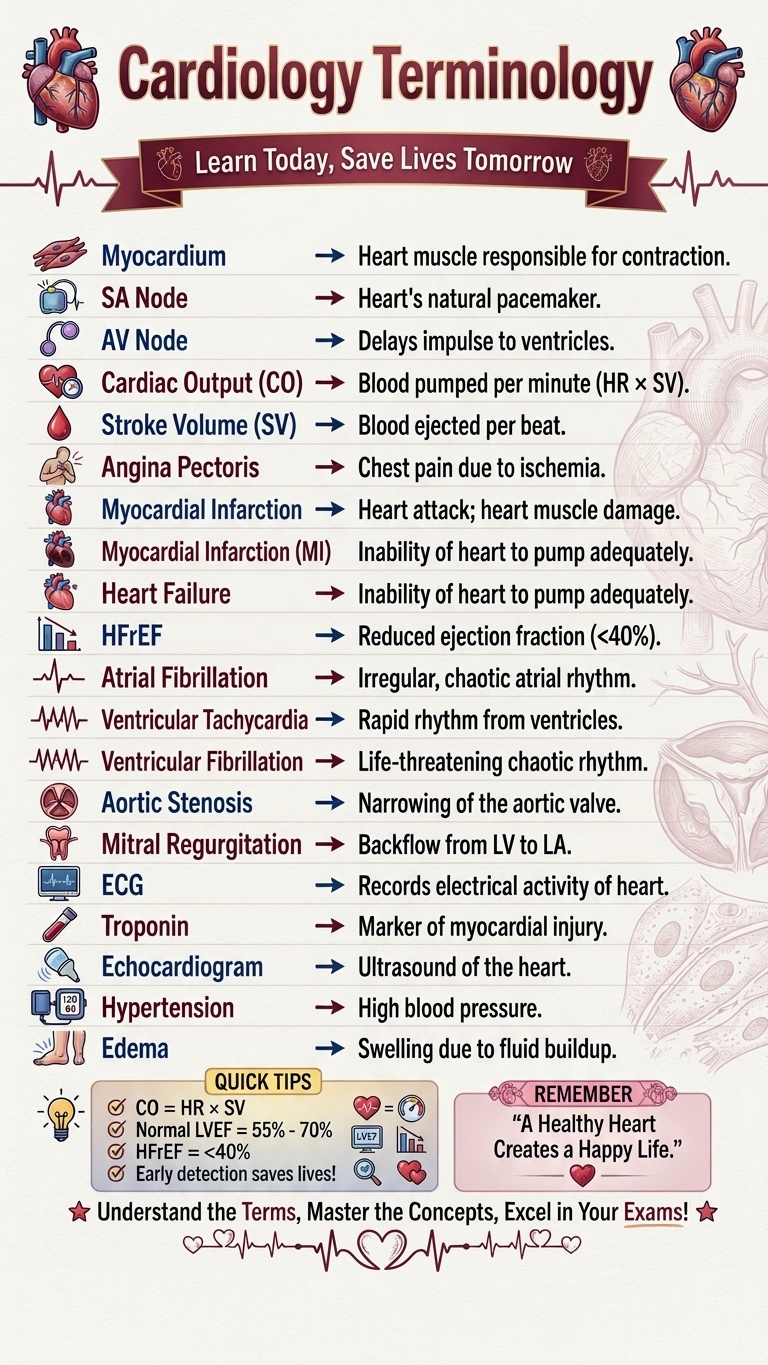
Whether you are a nursing student, medical student, or a clinician brushing up on your skills, mastering cardiovascular vocabulary is the foundation of accurate assessment and diagnosis. This visual guide breaks down 20 essential cardiology terms, translating complex pathophysiology into clear, digestible definitions. It covers foundational anatomy like the Myocardium (the heart muscle) and the SA Node (the heart’s natural pacemaker), alongside critical clinical conditions. For instance, it clearly distinguishes between Angina Pectoris (chest pain due to ischemia) and a Myocardial Infarction (heart attack and muscle damage), while also defining functional metrics like Cardiac Output (CO) and Stroke Volume (SV).
Beyond basic definitions, this infographic is an excellent exam preparation tool, particularly for understanding heart failure and arrhythmias. It highlights the difference between general Heart Failure and HFrEF (Heart Failure with reduced Ejection Fraction, defined as <40%), and identifies dangerous rhythms like Ventricular Fibrillation and Atrial Fibrillation. The study tips at the bottom provide crucial memory aids: remembering that CO = HR × SV and that a normal LVEF is between 55% and 70%. By understanding these terms and mastering these concepts, you are equipping yourself to recognize cardiac emergencies faster and excel in your clinical exams.
Leave a Reply