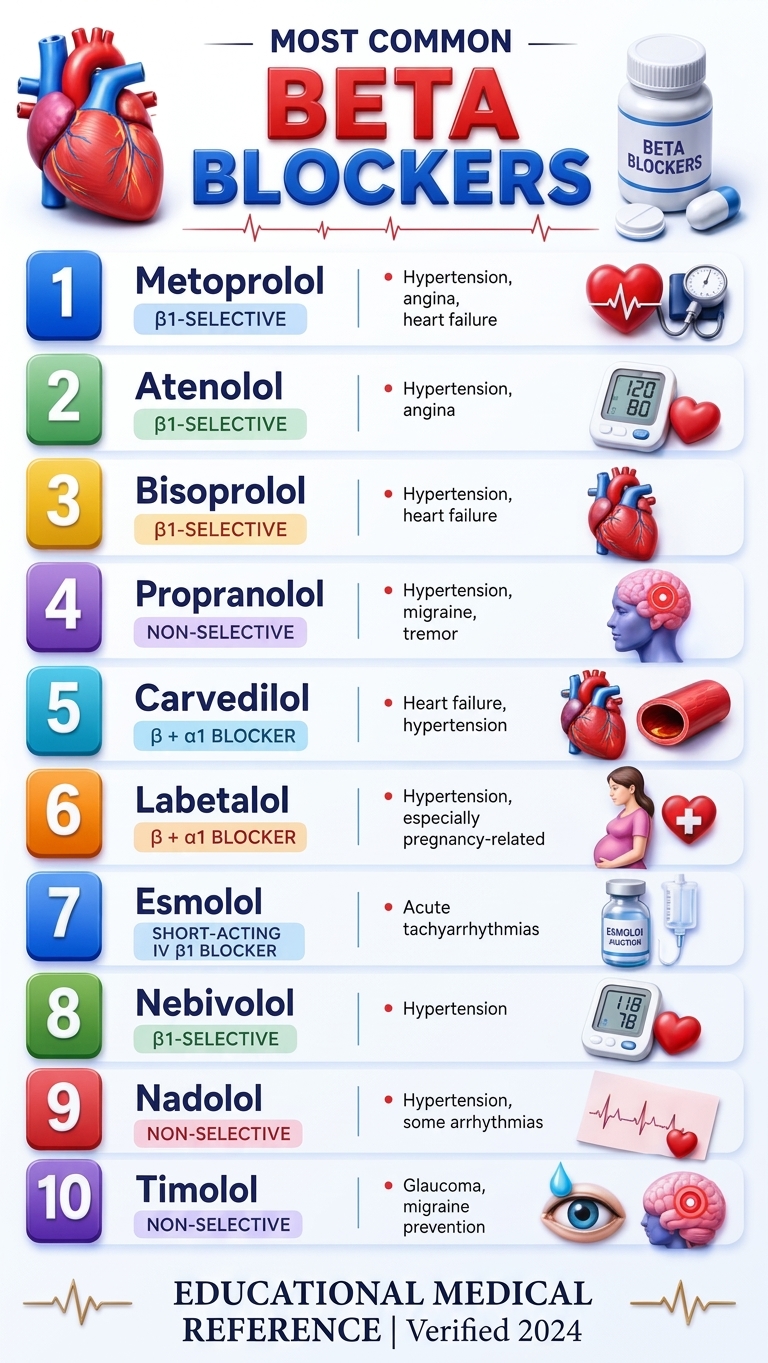
Beta blockers are a cornerstone of cardiovascular pharmacology, but with so many options available, remembering which drug does what can be challenging. This visual reference guide breaks down the top 10 most common beta blockers, highlighting their receptor selectivity and primary clinical indications. Understanding the distinction between β1-selective agents (like Metoprolol, Atenolol, Bisoprolol, and Nebivolol) and non-selective agents (like Propranolol, Nadolol, and Timolol) is crucial; while selective blockers primarily target the heart to treat hypertension and heart failure, non-selective blockers also affect beta-2 receptors, making them useful for conditions like migraines and tremors, but potentially problematic for patients with asthma.
Beyond basic selectivity, this chart highlights the unique roles of specific medications. For instance, Carvedilol and Labetalol are distinctive because they block both beta and alpha-1 receptors, making them particularly effective for heart failure and pregnancy-induced hypertension, respectively. Meanwhile, Esmolol stands out as a short-acting IV agent reserved for acute tachyarrhythmias, and Timolol is uniquely utilized in ophthalmology for glaucoma management. Keep this educational medical reference handy to quickly recall the mechanisms, side effect profiles, and specific clinical applications of these essential medications.
Leave a Reply