Mastering Medical Terminology: 20 Must-Know Prefixes for NCLEX Success
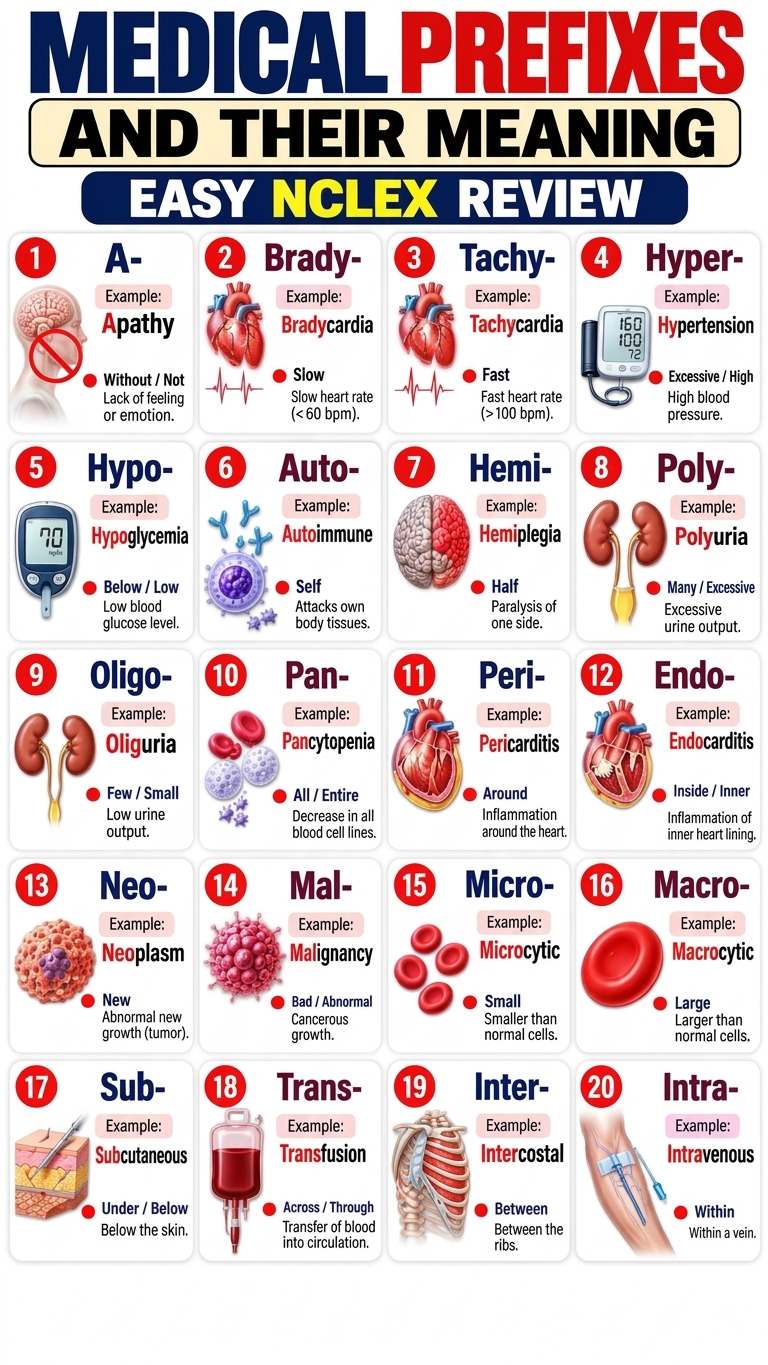
In the medical field, terminology is the foundation of effective communication and safe patient care. For nursing students preparing for the NCLEX or new healthcare professionals, breaking down complex medical terms into their root words and prefixes is the key to rapid comprehension. As illustrated in this “Easy NCLEX Review” guide, simple prefixes carry immense diagnostic weight. For instance, recognizing the difference between Brady- (slow) and Tachy- (fast) helps you instantly interpret conditions like Bradycardia versus Tachycardia. Similarly, understanding Hyper- (excessive/high) compared to Hypo- (below/low) is critical when assessing blood pressure or glucose levels.
This visual cheat sheet organizes 20 high-yield prefixes into clear, memorable categories with clinical examples. By mastering prefixes like Hemi- (half) for Hemiplegia, Oligo- (few/small) for Oliguria, or Pan- (all) for Pancytopenia, you can deduce the meaning of unfamiliar terms without relying on rote memorization. Whether you are deciphering anatomical locations like Subcutaneous (under the skin) and Intravenous (within a vein), or pathological processes like Auto- (self) immune disorders and Mal- (bad) malignancies, this guide serves as an essential quick-reference tool for your clinical rotations and exams.
Leave a Reply