Decoding Your Blood Test: A Must-Know Guide to Key Lab Markers
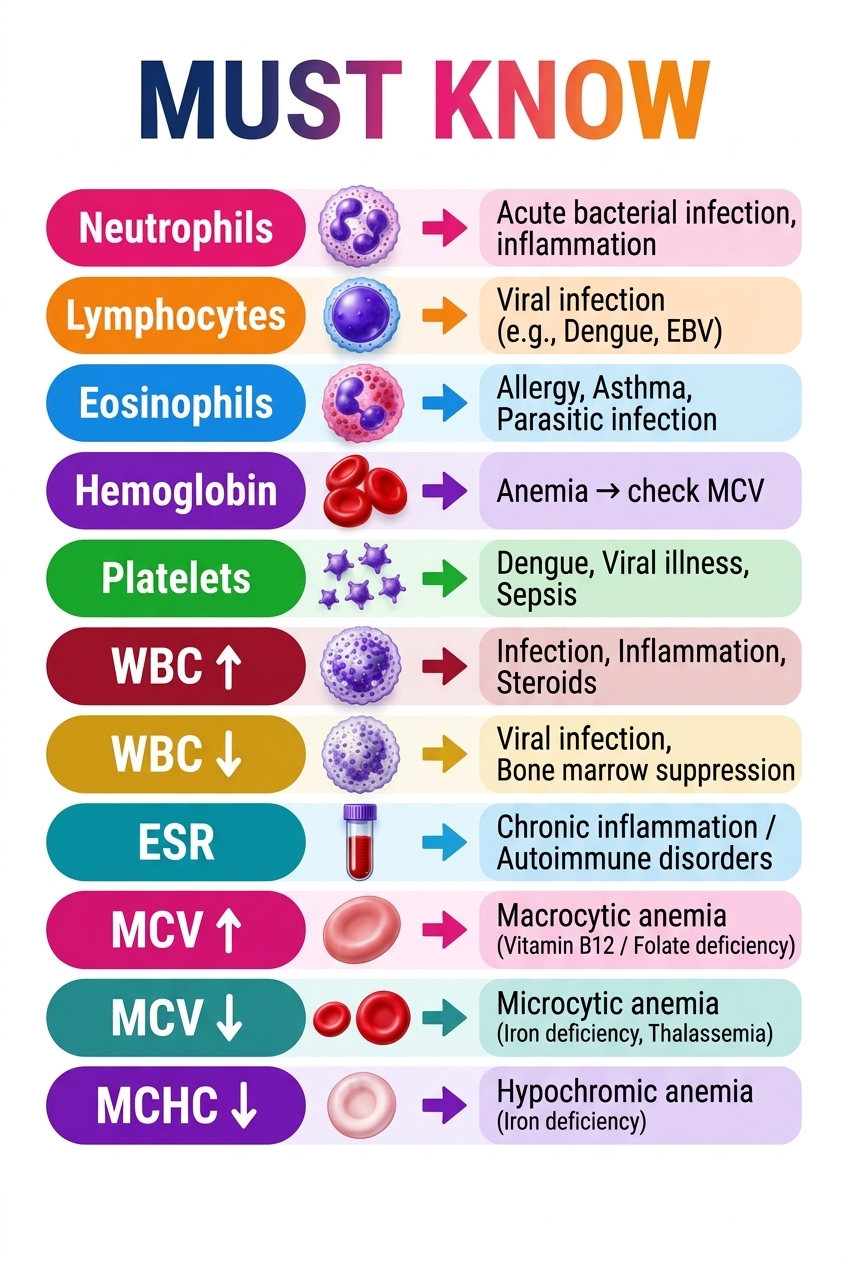
Reading a Complete Blood Count (CBC) or a metabolic panel can feel like deciphering a secret code. However, understanding a few key markers is essential for connecting laboratory results to clinical conditions. As highlighted in the “Must Know” chart above, specific cell types often point directly to distinct medical issues. For instance, elevated Neutrophils strongly suggest an acute bacterial infection or inflammation, while high Lymphocytes are typically a hallmark of viral infections like Dengue or EBV. Similarly, Eosinophils act as a red flag for allergies, asthma, or parasitic infections, and low Platelets can be a critical indicator of Dengue, other viral illnesses, or sepsis.
Beyond white blood cells, other indices provide vital clues about a patient’s overall health, particularly regarding anemia. Looking at Hemoglobin levels is the first step, but checking the MCV (Mean Corpuscular Volume) helps differentiate the type of anemia: a high MCV points to macrocytic anemia (often Vitamin B12 or folate deficiency), while a low MCV suggests microcytic anemia (commonly caused by iron deficiency or thalassemia). Additionally, markers like an elevated ESR indicate chronic inflammation or autoimmune disorders, and a low MCHC points specifically to hypochromic anemia. Keeping this visual guide handy can help you quickly connect lab values to potential diagnoses.
Leave a Reply